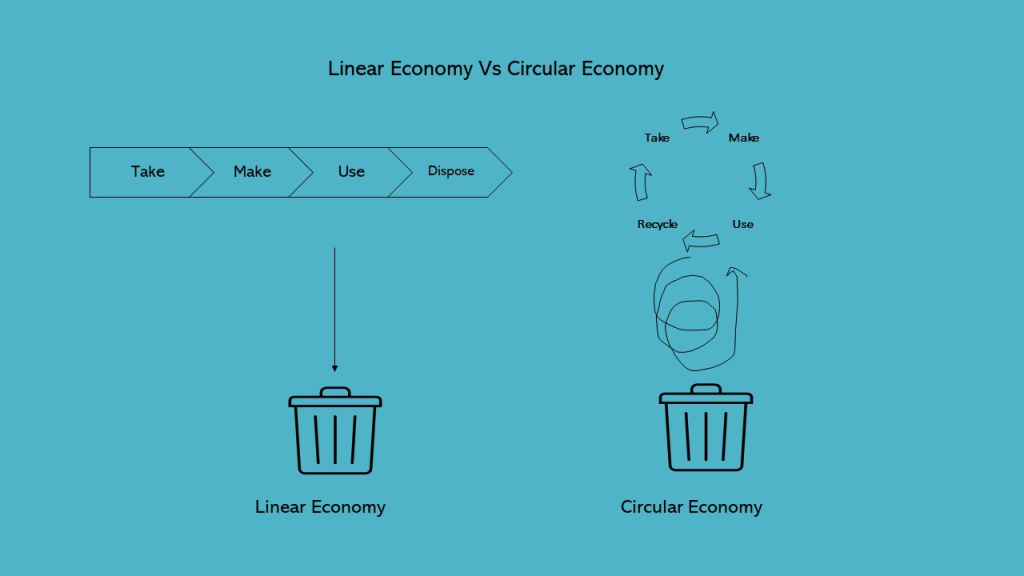
A circular economy is an economic system aimed at eliminating waste and the continual use of resources. It contrasts with a traditional, linear economy, which has a ‘take, make, dispose’ model of production. In a circular economy, resources are kept in use for as long as possible, extracting the maximum value from them while in use, then recovering and regenerating products and materials at the end of each service life. This approach is designed to minimize environmental impact, reduce the consumption of new resources, and create more sustainable patterns of production and consumption through ‘Make, use and recycle’ model.
We have been hearing about circular economy often these days. Few thoughts on Circular economy;
Circular economy practices in Indian agriculture can be seen in various initiatives1:
- Sikkim: India’s First Organic State: Sikkim has adopted environment-friendly agricultural practices that are aligned with circular agriculture principles. This includes the use of natural pest control methods and green manuring, guided by ancient Vedic farming techniques.
- Ambootia: Darjeeling Organic Tea Estates Pvt Ltd: This estate in Darjeeling has been recognized as a Model Organic Farm by international and national organizations. Their approach includes natural farming, hydro energy, low resource consumption, and the use of biodegradable materials.
These examples indicate a shift towards sustainable practices that align with the principles of the circular economy, focusing on reducing waste, lowering greenhouse emissions, and conserving resources.
Some steps to practice circular economy at field level in Agriculture
- Use of biodegradable mulches from plastic mulches
- Packaging reduction : Use of biodegradable materials, for example replacement of PP Bags with environmental friendly materials
- Use of renewable energy like solar panels and wind mills for irrigation and other related needs
- Crop rotation for reducing use of pesticides and fertilizers and maintaining soil health
- create valued added products like disposables from agriculture waste and producing bio energy from crop residues
- Focus on regional and seasonal produce to reduce transportation that in turn reduces emissions
- sustainable certification to encourage practices of sustainability wherein the producers are rewarded for adoption of such practices
1
Role of Government and Corporates
Governments can work on Policy creation and regulation. Take up strategic initiatives like creating supporting infrastructure for encouraging circular economies. Incentivize the stakeholders like tax break and disincentivize for any non compliance.
Corporates must work on responsible disposal mechanism of non biodegradable materials both at production as well as distribution level and manage within the value chain. Large corporates that are capable of investing in Research & Development must commit themselves to develop packaging aligning to the circular economy principles.
Last but not the least, it is also important to note that individuals can contribute to the circular economy. This the most important part of the economy to reflect in other parts of the ecosystem.
- Conscious consumption
- Support for circular economy businesses
- Recycling and upcycling
- Waste management beginning at home level
- Resource conservation
- Community engagement
Most of the above can be initiated at home level which aggregates to community and the national level.
Some of the startups in Circular Economy domain that are interesting to note are
Phool : www.phool.co that aim to solve the flower-temple-waste problem converting them to incense sticks.
PadCare Labs : https://padcarelabs.com/ PadCare Labs is an innovation driven company solving unmet need of menstrual waste management.
Cashify : http://www.cashify.in/ Cashify.in is an e-commerce platform for reselling used electronic gadgets.
Ossus Biorenewables : https://www.ossusbio.com/ Ossus uses waste carbon in industrial effluents as the starting material for green hydrogen.
Zerocircle : https://www.zerocircle.in/ Zerocircle produces bags made of seaweed that are designed to degrade like any living organism, leaving nothing but compost behind
Source: Trade promotion council of India


Leave a Reply