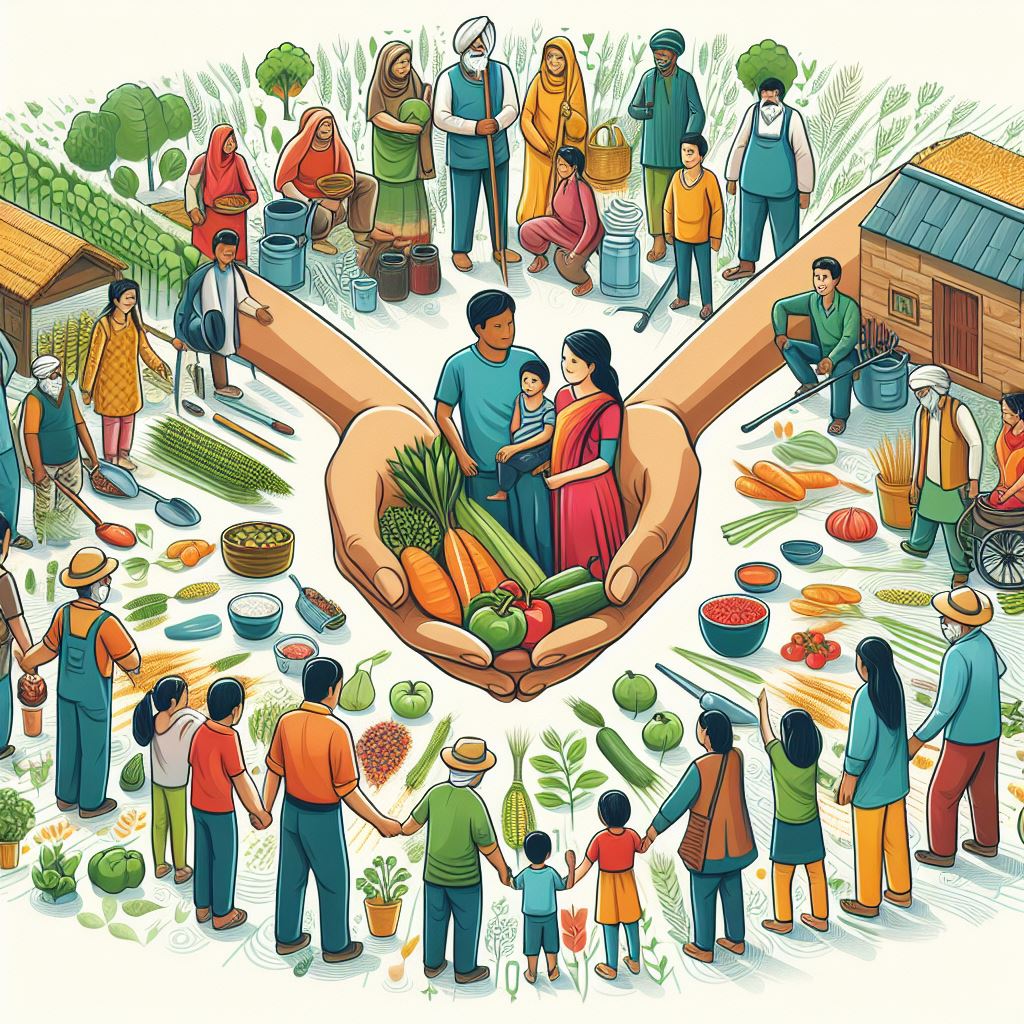
Community-supported agriculture (CSA) is a partnership between a farm and its consumers that shares the risks and rewards of farming. It is a production and marketing model whereby consumers buy shares of a farm’s harvest in advance. CSA initiatives in India are less exposed to market pressures, which gives farmers more freedom to experiment with agricultural practices and a more stable income throughout the year
The rationale behind CSA is consumers are connected to farmers where the former pays a lumpsum for farm fresh goods well in advance or on delivery and the latter supplies them after the season labeling the goods that are from their farm as well as other neighboring farms.
Pros:
CSA supports not only the sustainability of the environment and food systems but also contributes to offering fresh food, variety, fairness, and a sense of community. This helps in sharing the risks of farming and saves farming costs along with distant logistics for products that can be locally grown. It is built on mutual trust between the farmer and the consumer.
Cons:
CSA also has certain disadvantages like the narrow choice of produce, insufficient or excess quantities, weather vagaries, high customer turnover, the inability to market themselves, and regulatory concerns.
There are largely three models of CSA
- The farmer owns the land and equipment. Members provide capital and share in the labor.
- The farmer owns the land and equipment and does all or most of the labor. Members provide capital by buying shares.
- The CSA owns the land and equipment, and members are responsible for all labor. No farmer here.
Type of CSA are Single farms CSA and Multi farm CSA where in Multiple farms come together to offer a wide product range for the consumers.
Some of Community supported Agriculture supporting Institutions/initiatives in India are
- Centre for Sustainable Agriculture (CSA) https://csa-india.org/
- InAcres : https://inacres.com/
References:
- USDA National Agriculture Library
- https://growingsmallfarms.ces.ncsu.edu
- https://sfyl.ifas.ufl.edu


Leave a Reply